
Meet the Expert: Anna Wright
Welcome to 'Meet the Expert', our news series that brings you informative interviews with Armed Forces researchers, policy makers, and service providers. Read on to learn about current work, aspirations for progress and future work, and insights into expert perspectives on key issues impacting the Armed Forces community.
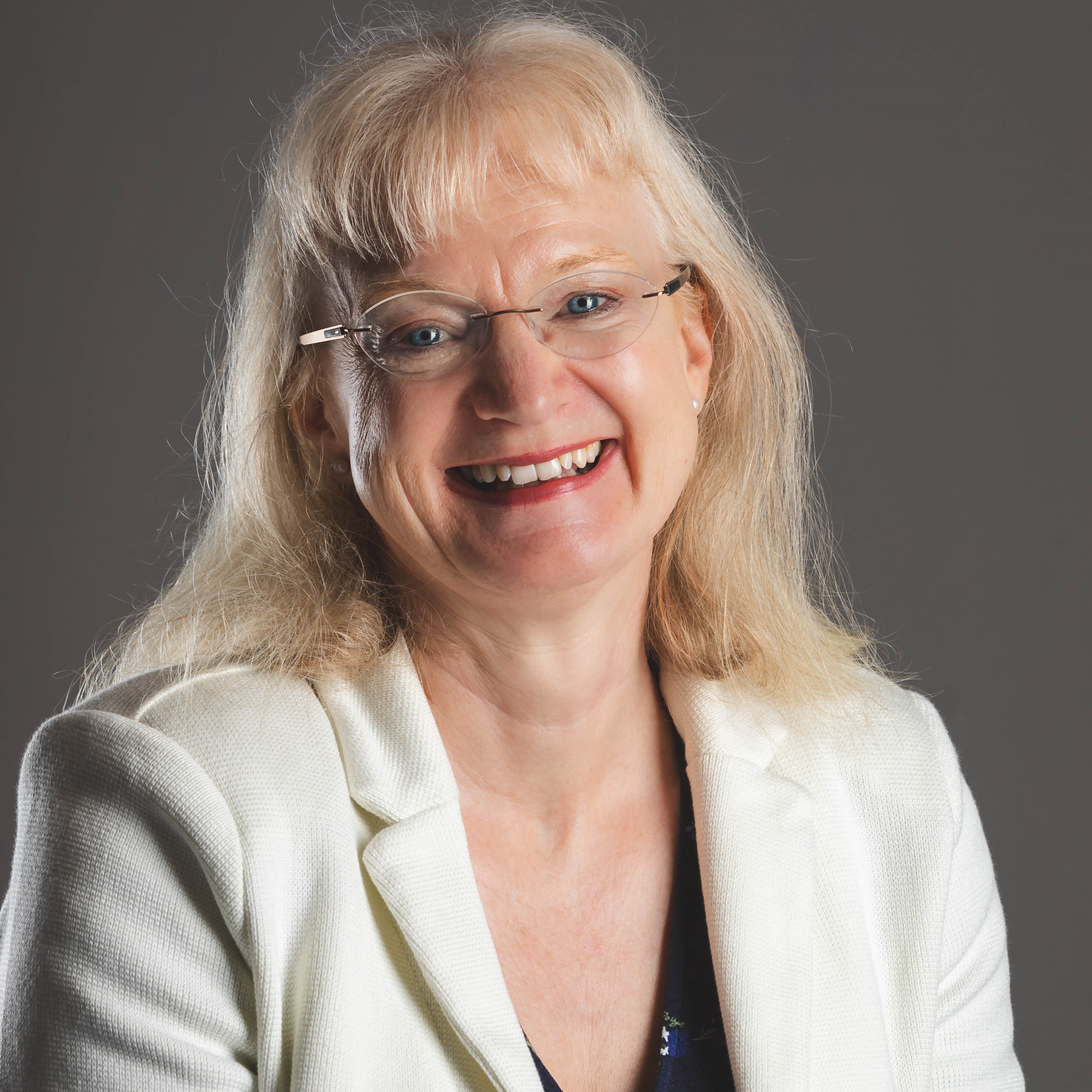 In this issue, we interviewed Anna Wright, Chief Executive (CEO) of The Armed Forces Covenant Fund Trust since 2022. Anna served as a logistics officer in the Royal Navy, as both a regular and as a reservist for 12 years. She also served in the Territorial Army as an officer cadet whilst at the University of Stirling.
1. Please tell us about your background and how you came to be involved in work relating to the Armed Forces community.
Alongside my husband’s 36-year career as a naval barrister, I joke about having enjoyed ‘three’ careers. With so many years of lived experience and a decade spent supporting the Armed Forces community, I’ve developed a deep appreciation for both the challenges the community faces and the support that genuinely makes a difference. My career has taken me on an unusual but very rewarding journey: 12 years as a logistics officer in the Royal Navy, followed by nearly a decade as a business and economics teacher whilst ‘following the flag’ and bringing up our two children. During the past ten years, I’ve had the privilege of standing alongside Royal Navy and Royal Marines families as their advocate as CEO of the Naval Families Federation, and I’m now proud to continue that commitment to support those who serve or have served in all three Services in my role as CEO of The Armed Forces Covenant Fund Trust.
2. What projects are you currently working on, and how do they fit into the bigger picture of understanding and supporting the Armed Forces community?
A project that I’m especially excited about right now is an ambitious and innovative ‘transformational’ grant programme designed to create real, lasting change. When we listened to the military bereaved community, we heard something important: many felt unseen and unsupported. So, we commissioned research to really understand their experiences and needs.
What we learned shaped a new, carefully targeted grant programme that led to a £2 million ‘transformational’ award. This funding empowers a lead organisation, the Defence Medical Welfare Service (DMWS), to bring together a group of specialist charities, including Scotty’s, Cruse and others, who will collaborate over the next four years to essentially change the landscape of support for this cohort.
Together—with the bereaved community at the heart of the process—we hope to reshape the support available in a way that feels meaningful, coherent, and enduring.
We have a further 19 of these sorts of transformational projects in flight, each funded around £300,000, and which are tackling knotty, enduring issues that face the Armed Forces community. This includes the Female Veterans’ Toolkit – which had its formal launch by the Minister for Veterans and People very recently. Drawing on extensive research and co-produced with over 800 female ex-Service personnel, service providers and employers, the toolkit offers guidance, case studies, and signposting to aid service providers in giving female ex-Service personnel support so they can thrive after Service.
3. What other areas and issues relating to the Armed Forces community are you especially passionate about or feel need further attention?
Domestic abuse in the Armed Forces community can be particularly challenging to address, as it is often hidden; families may fear that reporting it could adversely affect the Serving partner’s career. It’s why we’re collaborating with the Services and third sector partners to ensure that everyone affected—whether victim or perpetrator—can safely access the support they need.
Given the positive impact of this work to date, I very much hope that raising awareness of the support that our Free from Fear programme is providing will encourage others to come forward to seek help.
Another really exciting programme from my perspective is Servicewomen: Seen and Heard, which focuses on the issues uniquely impacting women during their Service. We’ve made 16 awards, including for the Royal Navy Recovery and Resilience Margins HQ. It is providing a nurturing space for healing, selfcare and emotional recovery for post-natal depression, miscarriage and stillbirth. It’s so important that this sort of support exists – it's the stuff which enables women to continue to thrive and succeed in their careers and lives, and the programme’s priorities are shaped by Servicewomen themselves.
And finally, I’m really excited to see the results of our new pilot Rise programme. We’re a project funder; we don’t fund organisations and their core costs. But having listened to lots of the charities working with us, we recognise that funding time for charities to do the thinking which will allow them to grow and become more sustainable is a really strategic piece of work: enabling small to medium-sized charities to review their governance, strategic growth, maturity of impact measurement and financial resilience, to make sure the difference they make for people in the Armed Forces community can be sustained into the future. I’m really looking forward to seeing what applications we get and the impact this pilot can make in service of the Covenant’s aims.
4. What are your future aspirations for the impact and utilisation of your or your organisation's wider work?
I’d like to build on our learning of what works. One way is through large, strategic, ambitious awards that encourage a group of specialist organisations to work together to tackle a ‘wicked’ problem. We have seen this work in our Thrive Together and Positive Pathways programmes, delivering holistic, accessible support for the ex-Service personnel community, and now this same collaborative approach to support the military bereaved is looking to be very encouraging. We’re also trying this at place level: looking at the impact of separation for the Armed Forces community in geographies where deployment is high tempo or for extended periods and exploring how a collaborative piece of work by organisations in that place can ease negative impacts for everyone affected.
I also think it’s important to get after the really hard stuff: the seemingly intractable problems. This can be on a small scale initially and lead to wider coverage if successful. This has been the case for Project Nova, which the Trust funded early on, and which is now established as the NHS’ Op Nova, providing support for ex-Service personnel in the justice system in England. We are pleased to have been able to introduce similar pilots in the three devolved administrations to offer parity of support.
5. What do you think are the key challenges impacting current ex-Service personnel and their families, and how do you think policy or provision of services can be best used to address them?
We know that most ex-Service personnel and their families flourish, contributing richly to society and enjoying a fulfilling quality of life. At the same time, the Covenant reminds us of our promise: to stand by those who have been disadvantaged due to their Service.
Challenges are rarely simple or short‑lived. Someone may live well for many years before their mental health becomes more difficult to manage, or a child may only later begin to feel the effects of growing up with a parent facing such struggles.
There are also some groups who continue to face longstanding barriers—members of the LGBT+ community, those who experienced sexual violence during Service, the wounded, injured and sick, and the families of the bereaved. We are deeply grateful for their Service, and under the Covenant promise, are committed to providing the understanding, care and support they deserve through our grant programmes.
6. What do you think will be the leading challenges for the next generation of ex-Service personnel, and how do you think policy or provision of services can be best used to address them?
I’m not sure we can fully know, given the global uncertainty. One thing which is certain is the rapidly evolving nature of warfare. This means the impacts of Service are changing too, and that in turn may mean that the Covenant Fund has to respond to different issues in future. We’ve been seeing that shift already in one of our programmes on the impacts of separation for families: some of the work being delivered responds to the impacts of ‘mental separation’ for reaper drone pilots and their families. They may still be living under the same roof, but may experience real mental distance from each other, given the unique intensity and challenges of that role.
We’re also very conscious of the changing demography of the Veteran sector and the fact that much more of our focus will shift to those who are of working age in the decades to come. The Covenant commitment stays the same, but those who may need it most will be different. We need to stay ahead of that in our understanding of needs and the evidence of what works to prevent and respond to them.
7. Can you tell us about your favourite part of your current work with the Armed Forces community and why?
My absolute favourite part of working with the Trust is seeing what our funding enables the voluntary sector to deliver. Whether through videos, end of project or evaluation reports or hearing directly from beneficiaries, the difference the projects have made is the Covenant promise writ large. Some of the projects are tackling very challenging issues such as addiction, homelessness and domestic abuse and hearing about the transformational effect of the funded projects can be incredibly moving. The absolute privilege of working in grant funding is the opportunity to watch a project go from paper to people – to understand the magic which can happen as a result of connecting fairly modest pots of money with an organisation which has an idea, the expertise and the means to make it happen.
8. Given unlimited funding and time, what would be your dream project to undertake involving the Armed Forces community?
Well, that might have to be unrestricted funding – the holy grail of grants! Times are very tough for the voluntary sector at the moment, with demand for services high, ongoing economic pressures and funding in demand. We know that the annual Covenant Fund is only one small part of the picture, which is why we seek to have a sharp focus on the most marginalised, least-heard people and issues in the sector. But if money were unlimited, the chance to fund organisations in an unrestricted way - especially when they’re delivering through really smart partnerships with other organisations, so that together they’re bringing outcomes which last for those with the most complex needs – could be really transformative for some of those most marginalised groups.
Many thanks to Anna Wright for sharing her insights.
Catch us next month for another interesting and informative interview with an expert from the Armed Forces community.