
Meet the Expert: Sue Liburd
Welcome to 'Meet the Expert', our news series that brings you informative interviews with Armed Forces researchers, policy makers, and service providers. Read on to learn about current work, aspirations for progress and future work, and insights into expert perspectives on key issues impacting the Armed Forces community.
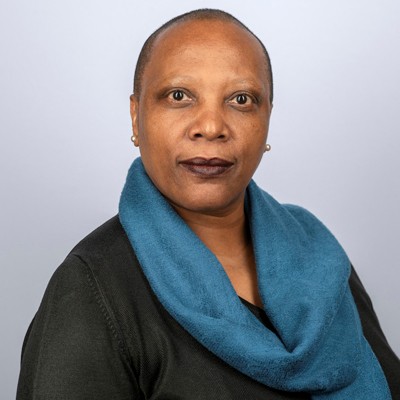 In this issue, we interviewed Sue Liburd, MBE DL. Sue is a British Army Veteran who served as a Nursing Officer for seven years. She currently operates as a strategic advisor, non-executive director, and researcher with expertise in inclusive leadership and system transformation within public services, health care, and the Armed Forces.
1. Please tell us about your background and how you came to be involved in work relating to the Armed Forces community.
My connection to the Armed Forces community is both personal and professional. I was raised in a military family; my father served in the RAF and brother served in the Royal Navy, and I later served in the British Army. This lived experience has given me a deep understanding of the realities of Service life, the complexities of transition, and the enduring nature of military identity across the course of one’s life.
After leaving the Army, my career developed in senior leadership, organisational development, culture change and system-level advisory across health, public service and complex national and international institutions. Over time, my work increasingly reconnected with the Armed Forces community, particularly around equity, inclusion, leadership and access to opportunity.
I now deliver this pillar of my portfolio across research, policy and practice in a number of strategic roles. These include being a Lead Partner for the Service Charities Equality Insights Programme funded by the Armed Forces Covenant Fund Trust, membership of the Strategic Advisory Board for the British Army Multicultural Network, and Strategic Director for the British West India Regiments Heritage Trust. I have previously served as Deputy Chair and Race and Ethnicity Lead for the Armed Forces Public and Patient Voice Advisory Group within NHS England, and as a member of the UK Government Veterans Advisory Board. My wider work has included Armed Forces leadership roles within regional NHS partnerships, research with the University of Lincoln, and trustee roles supporting both heritage and welfare organisations, including the Memorial Gates Charity and Defence Medical Welfare Service (DMWS).
Together, these roles enable me to operate across research, strategic advisory, service provision and advocacy, with a focus on how systems can better understand and respond to the diversity and lived experience within the Armed Forces community.
2. What projects are you currently working on and how do they fit into the bigger picture of understanding and supporting the Armed Forces community?
My current work focuses on inclusion and system change across large public service environments. My doctoral research explores how healthy and inclusive workplace cultures are created within complex organisations such as the NHS, local government, and universities. This has direct relevance for Veterans, reservists, and military families, entering civilian employment.
Alongside this, my advisory work within Army and NHS structures, focuses on strengthening cultural competence, addressing inequality and ensuring that policy and practice reflect the diversity of today’s Armed Forces community.
The bigger picture is moving beyond individual initiatives towards ecosystem-level change ensuring that employment, health, and public services are designed to recognise both the strengths and the varied experiences of military-connected people.
3. What other areas and issues relating to the Armed Forces community are you especially passionate about or feel need further attention?
One of the most significant challenges is the tendency to treat the Armed Forces community as a single, homogeneous group. Experiences differ widely between recent and long-term Veterans, across Service eras, and between UK-born personnel, Foreign and Commonwealth personnel, and different ethnic, social and cultural backgrounds. Without recognising this complexity and differentiation, support risks missing those who need it most.
I am also deeply interested in identity and belonging beyond Service. Transition is not only about employment or housing; it involves a shift in purpose, status, and community. Civilian organisations need a better understanding of this if they are to support meaningful and sustained integration.
There is also important work to do in relation to representation within remembrance and military heritage, ensuring that commemoration accurately reflects the full breadth and diversity of those who have served.
4. What are your future aspirations for the impact and utilisation of your or your organisation’s wider work?
My ambition is to strengthen the translation between evidence, policy, and practice. There is a growing body of research, but its value lies in how effectively it informs leadership decisions and organisational behaviour. A key part of this is shifting the narrative, from seeing Veterans primarily through a lens of need, to recognising those who have served as a strategic asset within the workforce and wider society.
I want to support leaders across health, employment, and public services to design systems that work well for Veterans and military families as part of mainstream provision, rather than through isolated initiatives.
In the longer term, success would mean that the Armed Forces community is routinely understood, valued, and supported within the fabric of major national institutions.
5. What do you think are the key challenges impacting current ex-Service personnel and their families, and how do you think policy or provision of services can be best used to address them?
Transition and fragmentation remain major challenges. Support exists, but it can be complex to navigate and varies significantly by location. Better coordination, clearer pathways and more effective signposting across health, employment, housing and welfare systems are essential.
Underemployment and loss of professional identity also affect many Veterans. Employers need greater awareness of how military skills translate into civilian roles, supported by clearer career pathways and stronger accountability through policy and the Armed Forces Covenant.
For families, the long-term impact of mobility, disrupted careers and Service life is still not fully recognised. Policy and provision need to take a whole-family approach rather than focusing solely on the individual who served.
6. What do you think will be the leading challenges for the next generation of ex-Service personnel and how do you think policy or provision of services can be best used to address them?
The next generation will transition into a labour market shaped by rapid technological change, more flexible career patterns, and less organisational stability. Preparing personnel earlier for this reality will be critical.
There will also be an increasing need to support psychological transition, helping people navigate identity, belonging and purpose.
Future policy should emphasise career-long transition planning, stronger partnerships with employers in growth sectors, and support for translating military leadership and technical experience into civilian contexts.
7. Can you tell us about your favourite part of your current work with the Armed Forces community and why?
What I value most is the opportunity to influence systems at a level where change becomes sustainable. When leaders understand both the capability within the Armed Forces community and the barriers people can face, relatively small changes in culture and practice can have a significant impact.
It is particularly rewarding to help shift the narrative from viewing those who have served primarily through a lens of need to recognising them as a source of capability, leadership, and resilience within organisations and communities.
8. Given unlimited funding and time, what would be your dream project to undertake involving the Armed Forces community?
With over 1,700 Armed Forces charities operating across the UK, my priority would be to strengthen collaboration rather than competition. A more coordinated approach would improve efficiency, reduce duplication and create a more seamless experience for those seeking support.
Central to this would be the development of a digital, personalised “Passport of Support” that evolves with the individual across their transition and beyond. Rather than a static record, this would be a dynamic interactive compass and lifelong platform that brings together employment, health, education, housing and family support in one place.
The passport would be always learning and adaptive, updating as circumstances change, signposting relevant opportunities and services at the point they are needed. It would travel with the individual across regions, services, and life stages, ensuring continuity and reducing the need to repeatedly retell their story. Accessible through multiple channels, digital, mobile, and supported access through employers and service providers, it would remain relevant, inclusive and user led.
At a system level, anonymised data and insight would help organisations understand patterns of need, measure long-term outcomes and design services based on evidence rather than activity alone. Alongside this, I would establish a national network of exemplar employers and public service organisations committed to implementing evidence-informed practice in real time.
Given unlimited funding, the aim would be to move from fragmented and reactive support towards a coordinated, intelligent ecosystem that enables the Armed Forces community to flourish across every stage of civilian life.
Many thanks to Sue Liburd for sharing her insights.
Catch us next month for another interesting and informative interview with an expert from the Armed Forces community.