
Meet the Expert: Professor Vince Connelly
Welcome to 'Meet the Expert', our news series that brings you informative interviews with Armed Forces researchers, policy makers, and service providers. Read on to learn about current work, aspirations for progress and future work, and insights into expert perspectives on key issues impacting the Armed Forces community.
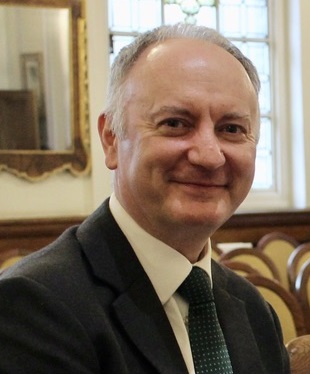 In this issue, we interviewed Professor Vince Connelly. Vince is Professor of Psychology at the Oxford Brookes University Defence and Security Centre and Director of Teaching and Learning for the Psychology programmes and is best known for his work on the Reserve Forces.
1. Please tell us about your background and how you came to be involved in work relating to the Armed Forces community?
As a long serving member of the British Army Reserve, I have always had an interest in the Armed Forces community through my part time military Service. I had previously carved out a research career in educational psychology examining the cognition and development of reading and writing skills in children and adults. However, in 2013, I was approached by the Ministry of Defence (MoD) to undertake a research project to explain the recurrent organisational tensions between full time regular and part time reservist members of the British Army. At the time, the British Army leadership planned a radical redesign, where reservists would be more deeply integrated into new British Army structures. However, there was little research that could be drawn upon to best understand how to integrate regulars and reservists effectively.
The research results exposed the power of workplace tensions to undo any proposed structural changes and helped to explain why previous integration attempts had failed1. It also explained why there was such resistance to integration and laid bare the scale of the cultural change required for the future integration of regulars and reservists to succeed. The project made an impact on the lead MoD writer of the 2013 UK Government White Paper on the UK Reserve Forces. As a result, the requirement to change the culture of the regular forces, to accept the need for reserve forces, was identified by the MoD as a key strategic risk to the Future Reserves 2020 £1.8 billion programme.
Given this impact I was then invited, with colleagues from Edinburgh University, to pitch an idea to the MoD to consider jointly sponsoring a large scale research programme with the Economic and Social Research Council on Reserve Forces. This came to fruition in 2014 and the ESRC/MoD funded four open competition projects about the UK Reserve Forces, across eight UK universities. This included my involvement in a project with my colleagues from the University of Edinburgh. The programme itself was a fascinating experience of the complexity of working on acedemic projects2 in conjunction with UK Defence, with very many ups and downs.
I have been involved with various projects on Reserve Forces and the wider Armed Forces community ever since.
2. What research projects are you currently working on and how do they fit into the bigger picture of understanding and supporting the Armed Forces community?
I have been assisting Claire Lee, Alison Cotton and Dianne Newbury with the Supporting All to Thrive (SATT) project, funded by the Armed Forces Covenant Fund Trust under the MOD Armed Forces Family Fund Research Grant programme. The study explored the educational opportunities, outcomes and experiences of Armed Forces children with additional needs and was examination of what it takes for these children and families to thrive within complex, often siloed systems. Drawing on quantitative and qualitative data, it consisted of an analysis of the National Pupil Database (NPD), a parent survey and art-based research with parents across the UK. The findings lay bare the relentless struggle of families to support their children, not only to thrive, but also to achieve basic access to education, and the personal costs of those efforts. The NPD data also reveals the impact of service life on children with additional needs, both positive and negative. A summary of the findings so far can be found here.
I have also been continuing to work on research to understand the lived experience of part time reservists and how they balance family and civilian work with their military commitments. Results demonstrate the sacrifice many part time members of the reserves and their families make to support this balancing act3. It is also clear that MoD internal policies and practice can hinder this delicate balance and have a negative impact on retention.
My other project has been to work with colleagues across NATO to cohere a “Reserve Forces Research” community of interest group following a NATO Science and Technology Organisation research workshop I led at NATO HQ in 2025. Parallel to this I am working with the NATO Committee on Reserves (NCR) through and with the NATO Science and Technology Organisation to advise the NCR on the latest research of relevance to their work with NATO’s Reserve Forces.
I am currently supervising two PhD students who are examining different aspects of reserve service. One is examining the welfare support needs of Armed Forces Reservists’ families and the other is examining the factors behind satisfaction with part time reserve service.
3. What other research or policy areas relating to the Armed Forces community are you especially passionate about or feel need further attention?
There is renewed interest in the Reserve Forces in the UK and across NATO due to the changed security situation in the world today. Most nations cannot afford to have standing Armed Forces made up of the required number of workforce ready to fight the large wars that, sadly, now seem a bit more likely. Peacetime Armed Forces are limited in size by national budgets but on the other hand must be ready to expand rapidly to cope with the heavier demands of war. A cost-effective approach many governments are now taking to partially solve this lack of workforce is to expand and rely more on their Reserve Forces.
A greater reliance on Reserve Forces has its own risks as well as benefits. Compared to full time regular personnel there has been much less research on reservist personnel. When we think of reservists in the UK we do tend to think of the “volunteer reservist”, those civilians (and ex-regulars) who voluntarily serve in the military part time and have a liability to be mobilized in a crisis. There is some research we can now draw upon to illuminate the experiences of the volunteer reservist. However, there is a larger reservist population of previously trained ex-regular veterans who also retain a legal liability to be recalled in a crisis. This is the newly labelled “Strategic Reserve” and while they only comprise a small sub-population of UK Veterans, they will include those most recently going through “transition”. The Strategic Reserve, while always being in place legally, has practically been in abeyance for many years, to the extent many dismissed it as a reality. The stark messages about shortfalls in UK Defence in the 2025 UK Strategic Defence Review saw it recommend that the Strategic Reserve be re-established by 2030.
This recent UK discussion about the Strategic Reserve has led to the proposals now going through parliament to modernise and expand this liability under the 2026 Armed Forces Bill. Many other nations are now beginning to realise that this potential source of ex-regular trained workforce, also in abeyance across Europe for many years, is a key component of their Reserve Forces. I was asked by the House of Commons Select Committee on the UK Armed Forces Bill to comment on the proposals and it was clear we do not yet know much about those veterans now being considered liable for recall. I have been assisting the MoD with some of this work but there remain many unanswered questions about this population.
4. What are your future aspirations for the impact and utilization of your work/research?
Building a “Reserve Forces Research” community of interest group is the primary aspiration for the future to ensure researchers work together on the key issues around the relatively understudied reservist population. There are varying statistics on the number of reservists across NATO but is likely trending upwards of two million personnel at any one time. This is a significant population that are subject to increasingly more military interest. We know very little about the lived experience or physical or mental health of these very diverse reservist populations across NATO and their preparedness for increasingly severe challenges such as large-scale combat operations. Working as a community to understand reservist issues in conjunction with NATO’s Reserve Forces leadership should assist us in making progress more rapidly.
5. What do you think are the key challenges impacting current Veterans and their families, and how do you think research and/or policy can be best used to address them?
I think the stereotypical narrative of Veterans as “mad, bad or sad” continues to have an impact on societal perceptions of current Veterans and their families and the Armed Forces in general. I poll our undergraduate psychology students at Oxford Brookes on the prevalence of PTSD and suicide in Veterans when teaching about common myths around mental health. The undergraduates continually overestimate, by a huge amount, the prevalence of PTSD and suicide in Veterans and these results have not materially changed over the last ten years. Rita Phillips, one of our previous PhD students at Oxford Brookes, explained the general populace tendency to concurrently valorise and victimise Veterans4 and the impact of the perceived legitimacy of recent conflicts on Veteran perceptions. No-one wants to underplay the significant challenges with transition and mental health many Veterans and their families undergo but the prevalence of military stereotypes applied to a very diverse Veteran population points to a wider issue with societal beliefs about the impact of military Service on Veterans we need to tackle.
6. What do you think will be the leading challenges for the next generation of Veterans and how do you think research and/or policy can be best used to address them?
From my own more limited perspective focussing on reserve Service I see a key challenge impacting current Veterans and their families is how transition to civilian life may be impacted by the re-emergence of the Strategic Reserve. The realisation that leaving regular Service is not necessarily the end of military Service may have an impact on transition. What does this mean for our understanding of “leaving well” if there is still a requirement to turn up for duty at some points in the year (as was the case in the last Cold War)? How will this liability sit with families? Will continued contact with Defence be a negative or positive for some Veterans and their transition journey? Some countries have always retained this liability and what can we learn from their veteran populations?
The Veteran landscape has changed fundamentally since the end of the last Cold War, as have Veterans and their family expectations. While the predecessors of the Strategic Reserve throughout the 20th Century were largely successfully recalled in crisis, the UK government should consider how today’s Strategic Reserve population differs from before. Internally, the government does have some sources of data available, but these will require to be updated and expanded.
7. Can you tell us about the methods you tend to use in your research, and why you gravitate towards these kinds of approaches?
As someone from a cognitive psychology background I have ended towards more quantitative methods for my research. A delight of the last ten years has been the opportunity to learn about qualitative methods. I think that the diversity of the Armed Forces community means that we can learn more when we approach a project with a mixed methods approach.
8. Given unlimited funding and time, what would be your dream piece of research to undertake involving the Armed Forces community?
A longitudinal study of reservist personnel in the UK Armed Forces where we could investigate factors impacting on their integration, readiness, health, and the balancing act with family and civilian work, would be a dream piece of research to undertake!
Many thanks to Vince Connelly for sharing is insights.
Catch us next month for another interesting and informative interview with an expert from the Armed Forces community.
References
- Connelly, V. (2021). Understanding and Explaining the Marginalization of Part-Time British Army Reservists. Armed Forces & Society, 47(4), 661-689.
- Connelly, V., & Morrison, Z. (2024). The UK Future Reserves Research Programme (FRRP) 2014 to 2018: Results, Impact, and Reflections. Canadian Military Journal, 24(4), 10–18. https://doi.org/10.24908/cmj.v24i4.19326
- Carter, B., Crawford, E., Cunningham-Burley, S., Tindal, S., Connelly, V., Loretto, W., & Morrison, Z. (2025). Part-Time Military Service and Sacrifice: Understanding the Outcomes of Long-Term Reserve Service with Partners and Employers. NATO Science and Technology Organization. [Presentation]
- Phillips, R. H., Connelly, V., & Burgess, M. (2023). How do Sociodemographic Characteristics Influence UK Civilian Opinions of UK Armed Forces Iraq and Afghanistan Veterans? A Mixed-Method Approach. Armed Forces & Society, 49(2), 419-445.